MHCI + D Final Project
Breaking the loop: Leading a shift from restriction to behavior change
I led this project by grounding the team in user research that reframed doomscrolling as an automatic habit.
DURATION
Aug 2025- Dec 2025
ROLE
Product Designer
TOOLS
Figma, FigJam, Cursor, AI, Linear
TEAM
Rakshit, Clarisse ,
Madhurima, Madeleine & Me (Product Designers)
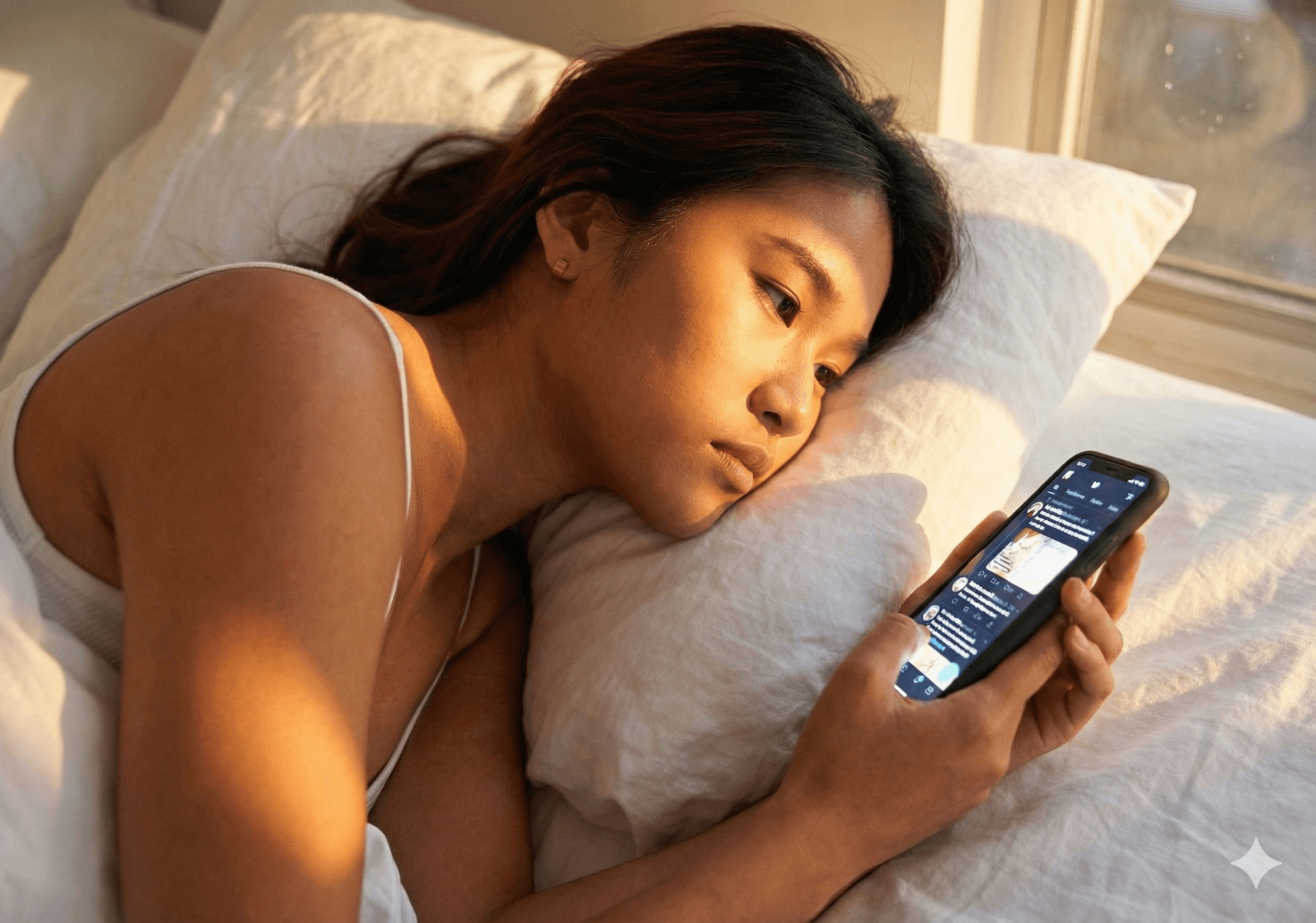
We’ve all been here
What starts as a short break often turns into an automatic habit.
"It’s scary how you open the app for five minutes and lose forty-five.”
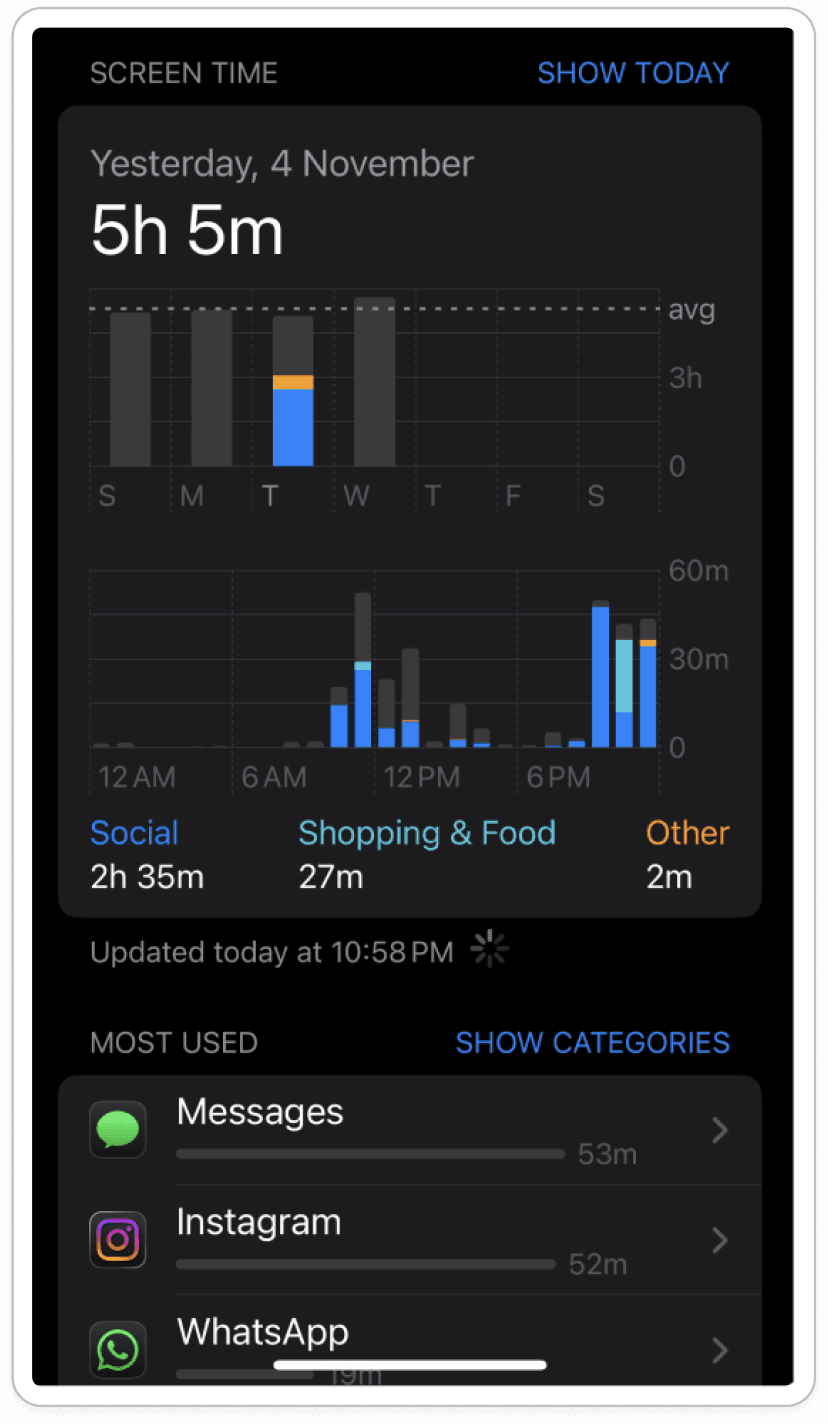
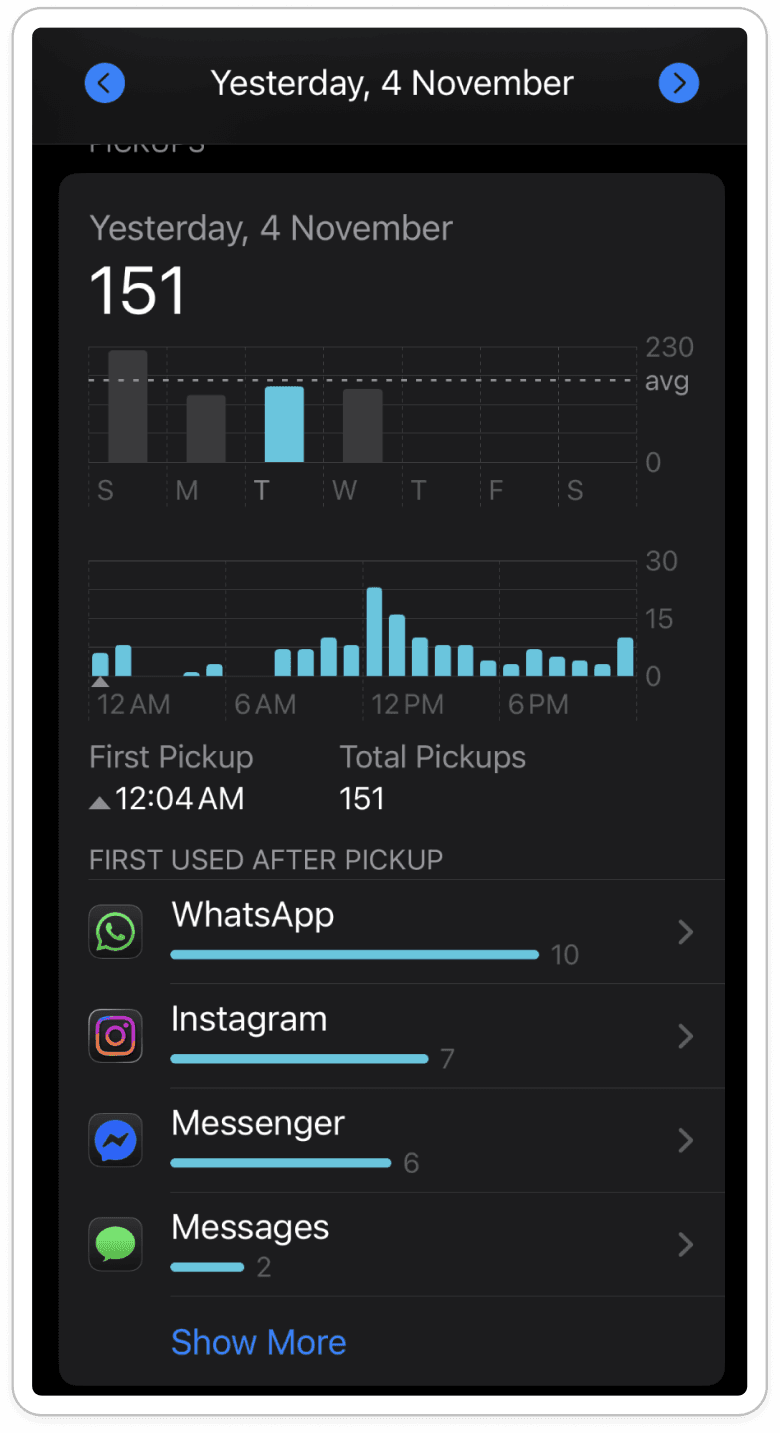
When users saw their real screen time, emotions shifted immediately.
Neutral feelings turned into guilt and frustration in real time.
Most tools try to solve this with limits or blocking. Our interviews showed people bypass these tools or switch platforms.
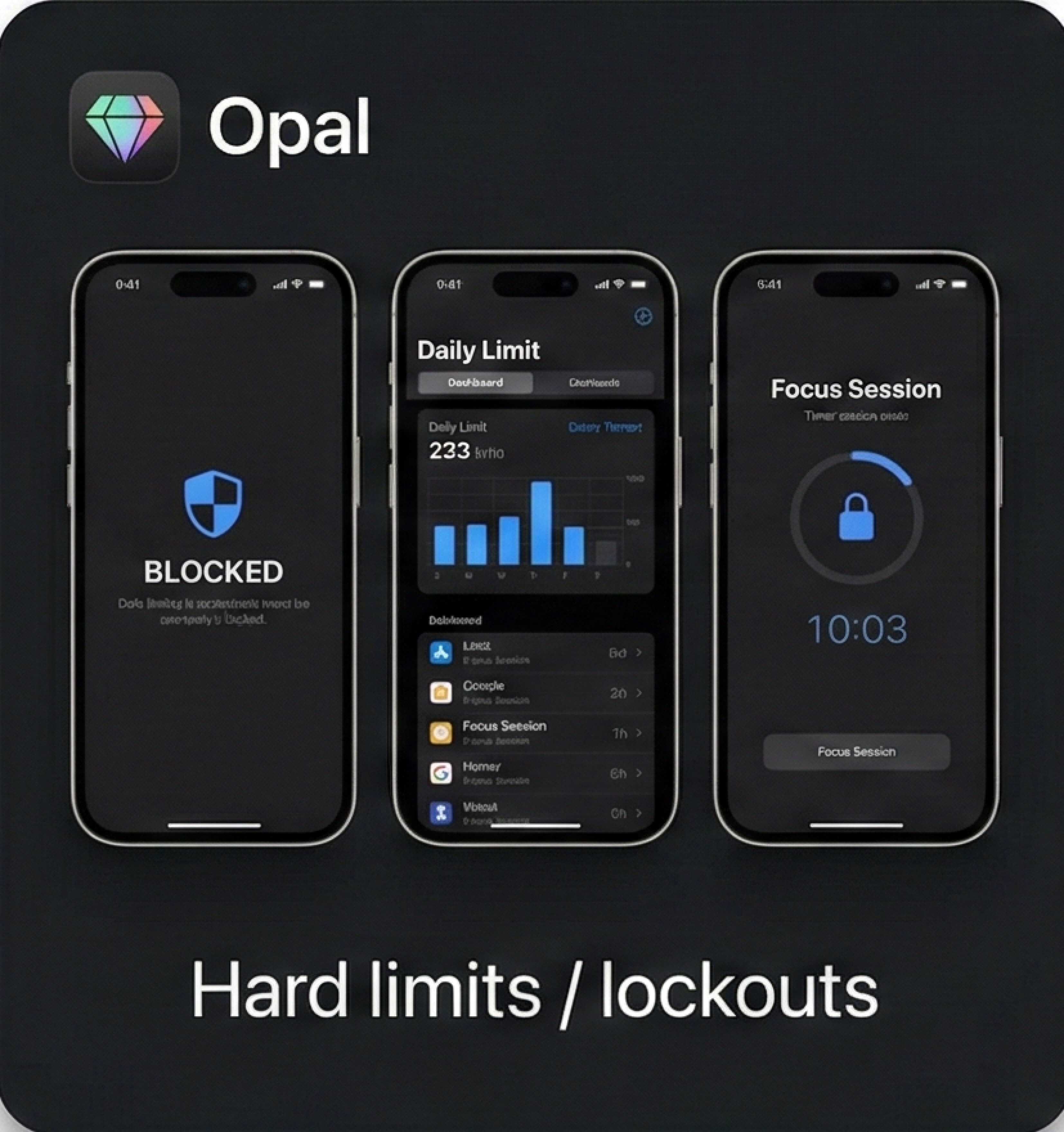
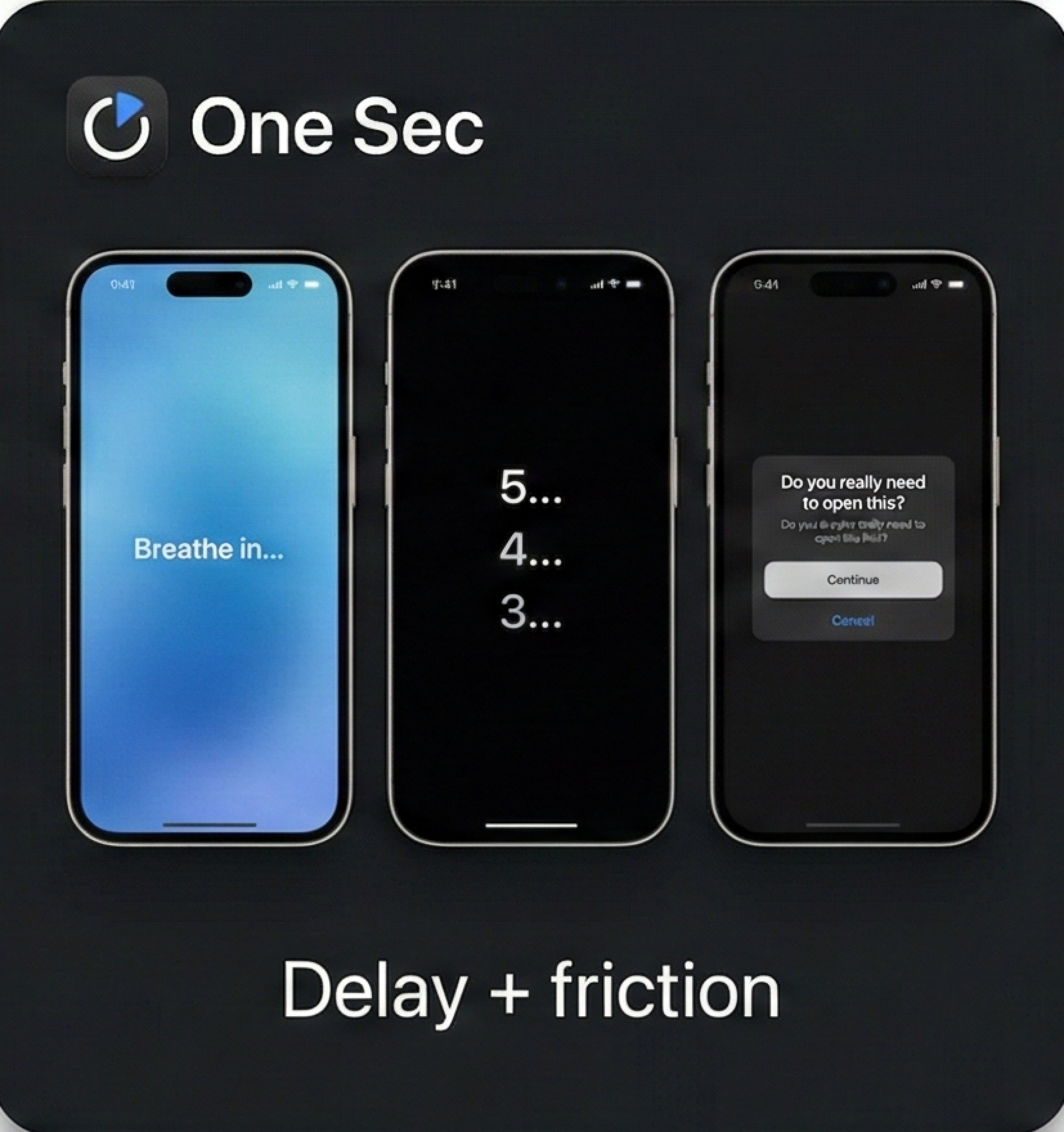
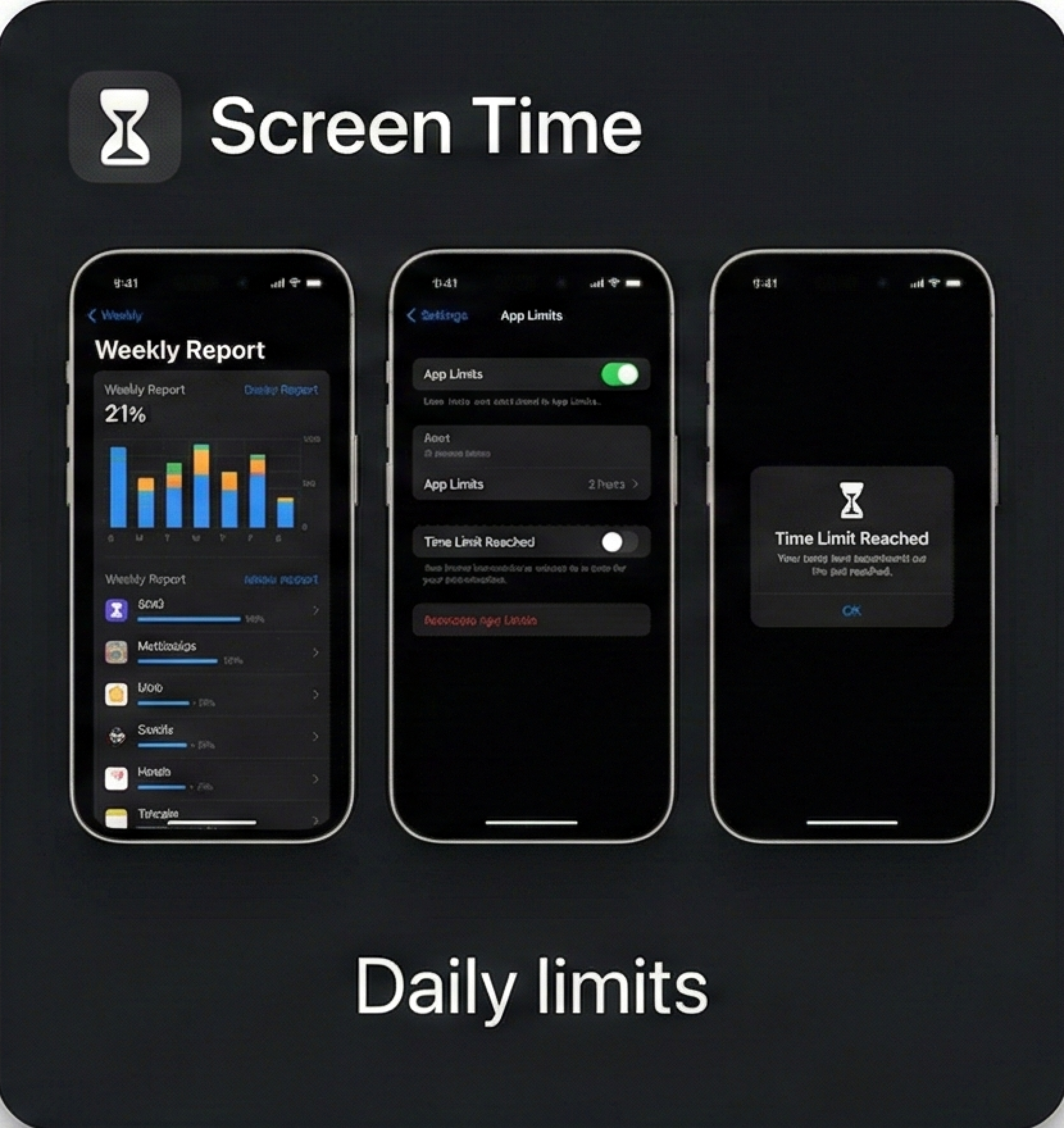
Not all Scrolling is Bad
Many users scroll intentionally for news, information, or connection. The problem is doomscrolling: a mindless escape followed by guilt.

Doomscroll Dana
The Self-Aware Scroller
“I’d lose hours and then have to stay late or do work on weekends.”
Uses social media for quick relief during stress, but often loses hours and feels guilty afterward.

Low-Key Liam
The intentional scroller
“Everything you see online is trying to make you feel or think a certain way.”
Uses social media deliberately for information or entertainment and dislikes when feeds feel manipulative.
PROBLEM STATEMENT
Doomscrolling is not a conscious decision but an automatic habit people fall into during moments of avoidance, boredom, or stress. Existing solutions focus on restricting access after the fact, which often leads to guilt, workarounds, and eventual disengagement rather than real behavior change.
How might we help people interrupt doomscrolling habits in ways that feel supportive rather than punitive, so they can build healthier attention patterns over time?
Finding the behavior behind the scroll
I interviewed one participant, then reviewed all 6 team interviews to synthesize recurring themes. Patterns repeated quickly across motivation, avoidance, and guilt cycles.
INTERVIEW INSIGHTS
Doomscrolling is automatic, not intentional
Users were not choosing to scroll. It happened on autopilot.
“I’d just open it without realizing; a total habit.”
Scrolling is used to avoid work or stress
Scrolling functions as an escape from tasks users do not want to face.
“I’d lose hours and then have to stay late or do work on weekends.”
Awareness alone does not change behavior
Knowing the problem does not stop the habit.
“Even when users set limits or practice awareness, it’s still difficult to stop once they start.”
Quitting apps does not stop the behavior
The platform changes, but the habit stays.
“I deleted Instagram and just ended up on YouTube instead.”
I then translated shared themes into user stories to ground the team in behavior, not assumptions.
As someone who feels guilty after long scrolling sessions, I want support that does not punish or shame me, so behavior change feels achievable instead of discouraging.
As someone who deletes apps but still finds myself scrolling elsewhere, I want help breaking the habit itself, so the behavior does not just move to a different platform.
Scrolling starts as avoidance, becomes mindless, and is reinforced by guilt, making the behavior repeat.
Designing for behavior change, not control
Early ideas leaned toward blocking or restricting apps, reflecting common industry patterns.
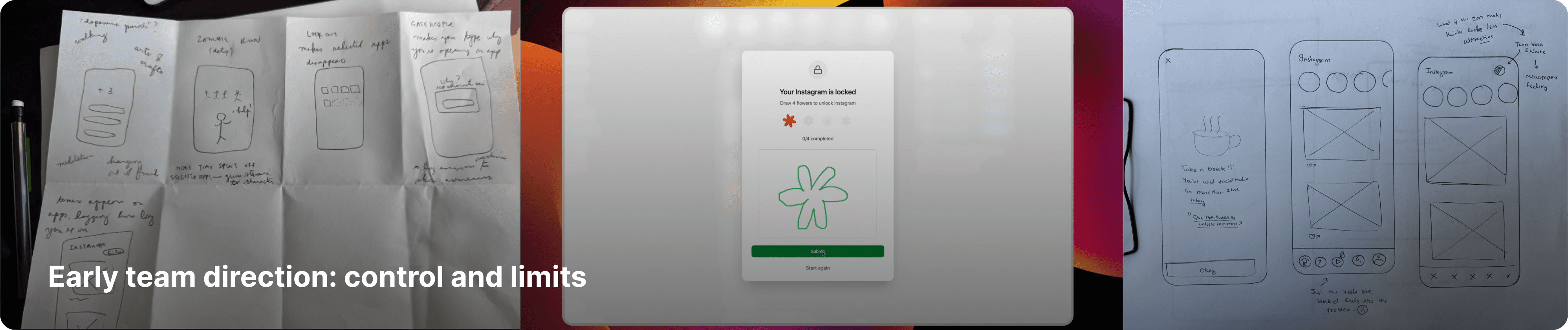
Based on interview insights, I proposed a different direction and created wireframes focused on behavior change rather than control. These wireframes emphasized cues, rewards, progress, and reflection as a way to interrupt doomscrolling without punishment. This direction ultimately shaped the final concept.
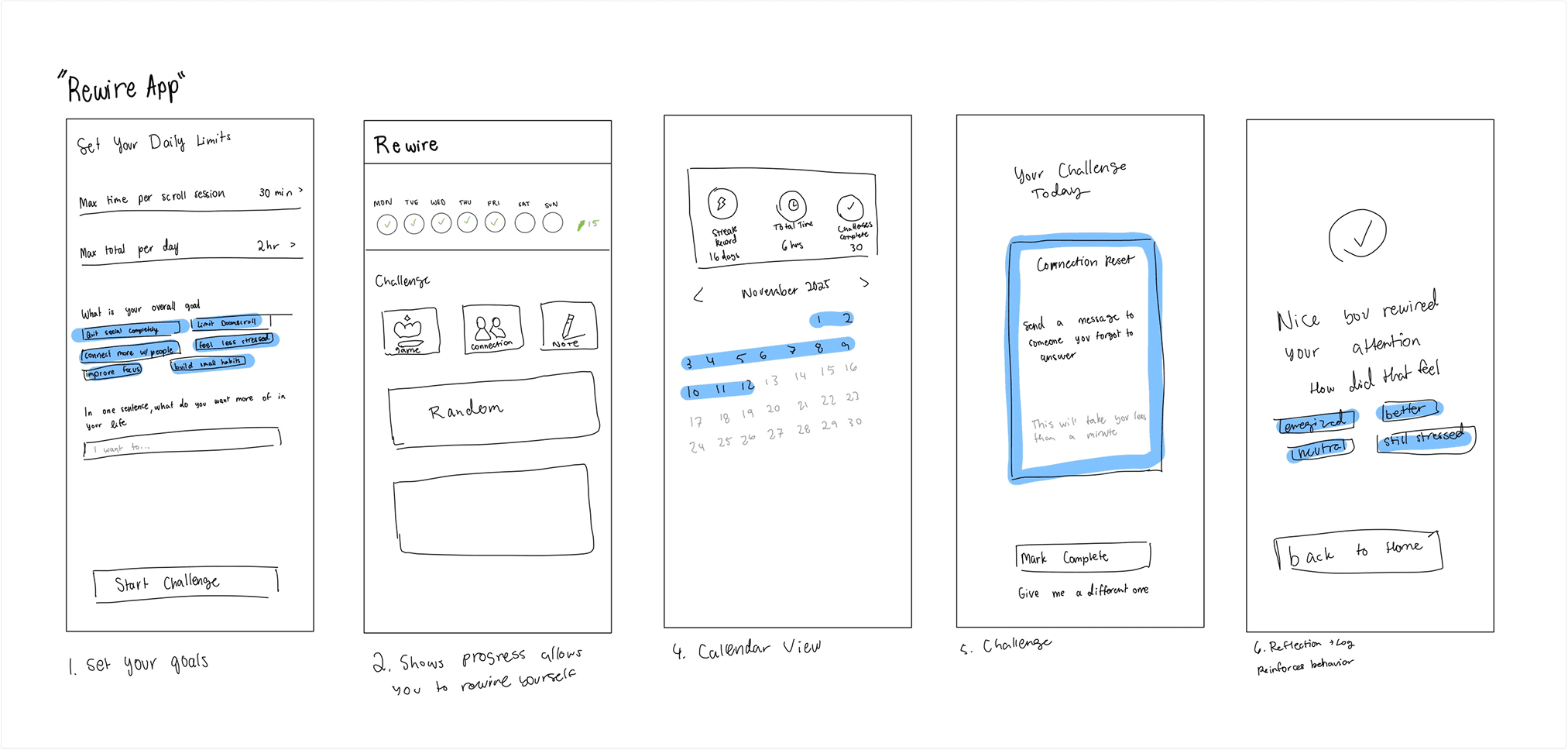
Designed by me
This shift toward habit change also inspired the product name, Rewire, reinforcing the idea of reshaping automatic behaviors rather than blocking access.
Aligning the team around behavior change
To validate this direction, I worked with the team to bring in Kelley for a behavior-change workshop, which reinforced the importance of habit replacement over control.
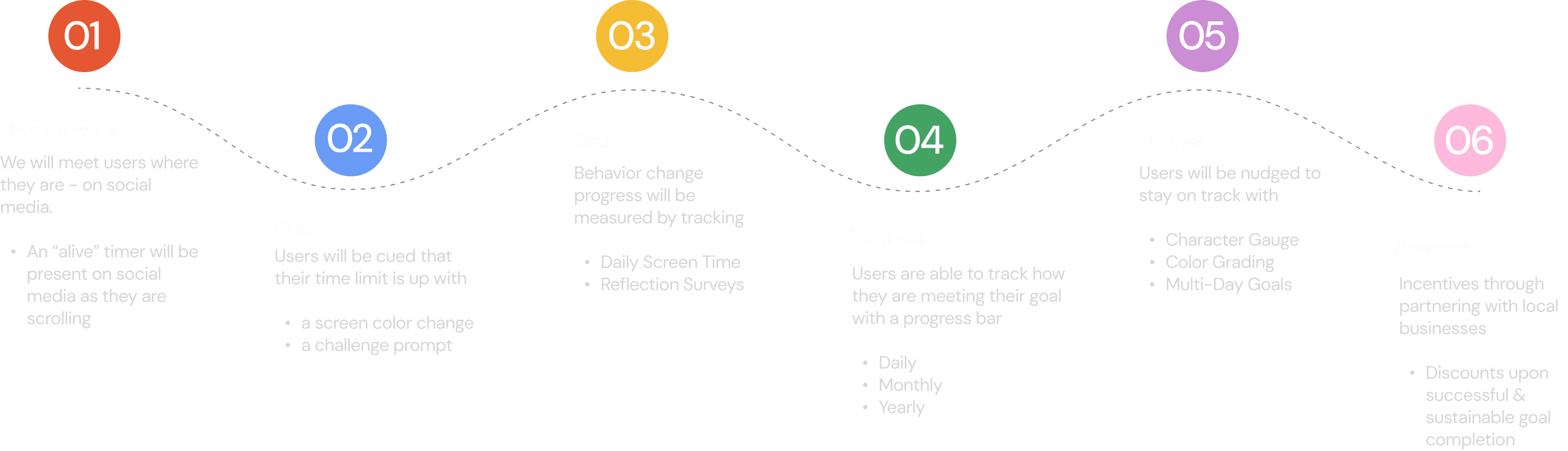
With this alignment, we evolved the wireframes into mid-fidelity prototypes for usability testing.
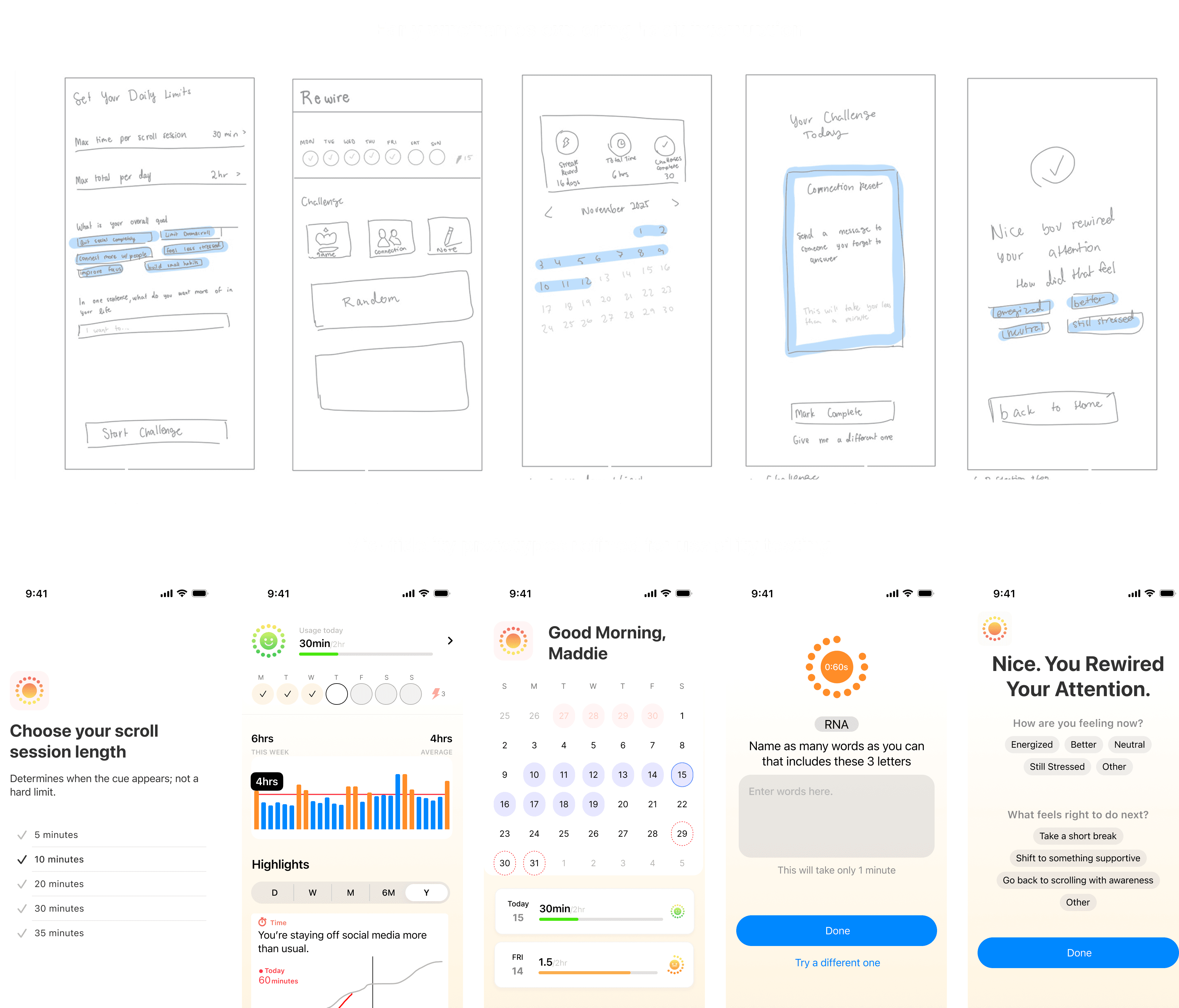
All screens designed by me
Early usability testing almost pushed the team to remove challenges entirely.
Initial Mid-Fid Wireframe
“This depends on where I am.” - P2
“I often look at social media when I'm commuting so I would not want to do this.” - P4
“What if I'm in class and I can't stand up?.” - P5
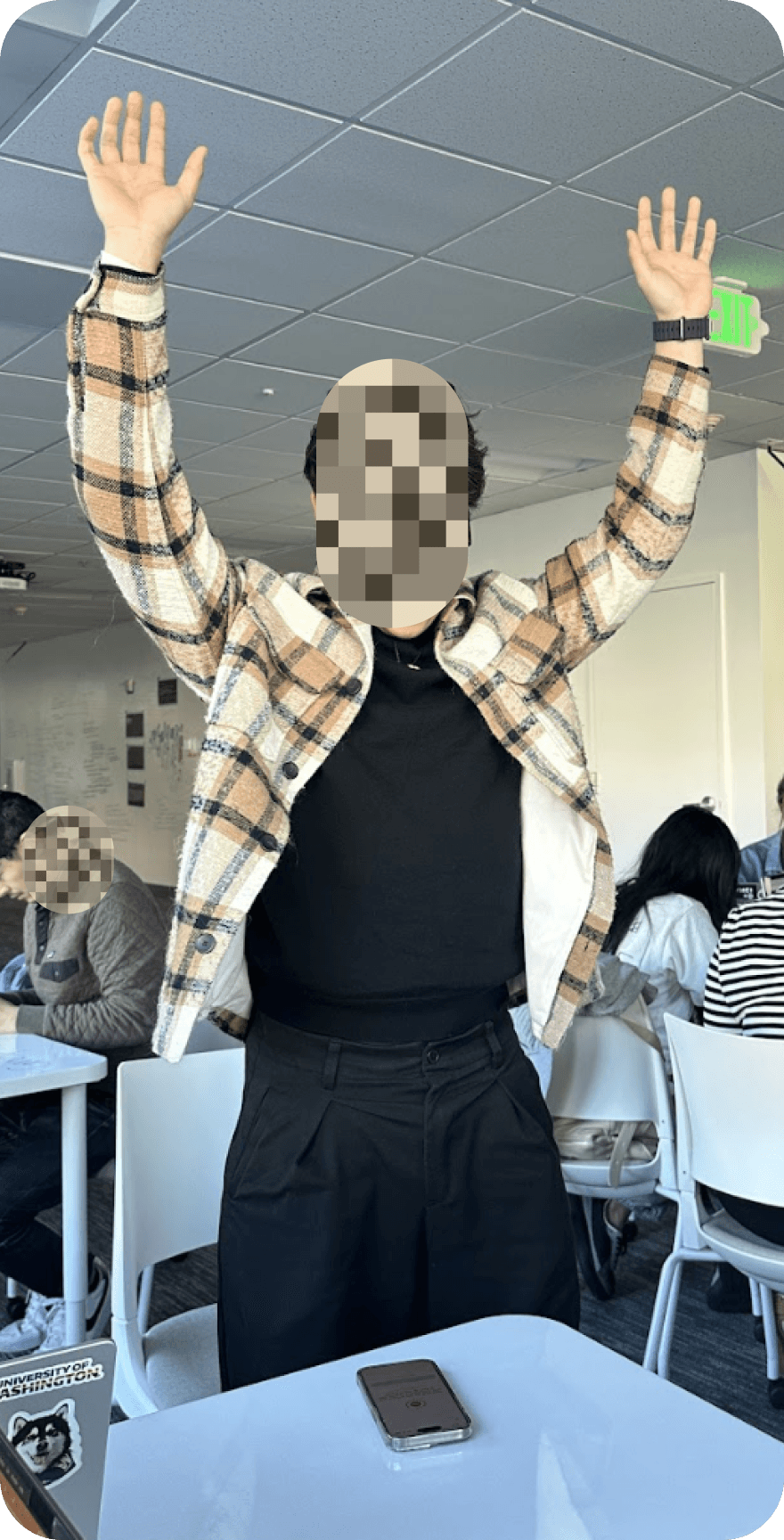
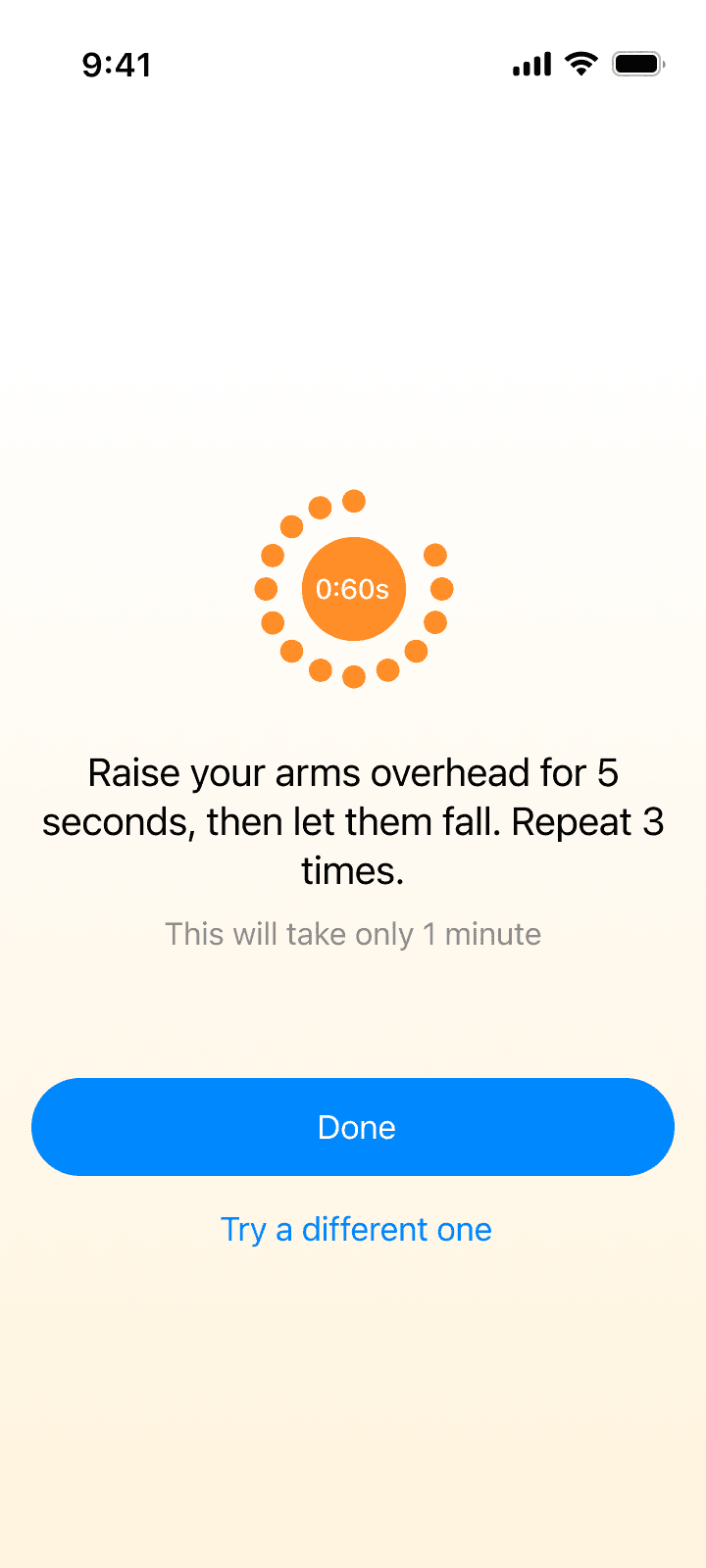
Designing for success across contexts
Rather than changing challenge types, I focused on refining when challenges appeared by introducing context awareness and flexible switching.
Designed by me
Why these Challenges?
Despite mixed usability feedback, I kept physical and mental challenges because both provide low-effort interruptions that help users with ADHD break automatic scrolling at the moment it starts.
Designed by me
Reflection pulls users out of Autopilot
Finally, I elevated reflection as a core part of the experience. By prompting users to choose what felt right to do next, the reflection screen increased awareness and reduced the likelihood of returning to mindless scrolling.
Designed by me
Team Impact
I shifted the team away from building a blocking app toward a behavior-change approach grounded in user research. By advocating for cues, challenges, and reflection instead of restriction, the final concept focused on interrupting habits rather than punishing users.
Designing with ADHD and low-motivation scenarios in mind led to a more resilient system. Context-aware challenges and flexible switching ensured users could succeed across environments instead of failing due to rigid constraints.

Reflection & Next Steps
This project showed me how to listen to feedback critically while still standing up for the user. I learned to distinguish between feedback that signals framing issues and feedback that requires a change in direction.
Next, I would design recovery after failure, such as offering additional challenges to rebuild a missed streak. I would also explore iOS feasibility constraints and investigate system-level options like Live Activities, since the timing of the cue is essential to behavior change.
Feasibility Constraint

REACH OUT!
If you're building for education, care, or real-life complexity, reach out: naoboru@sas.upenn.edu — I’d love to collaborate.